Russell E. L. Butler
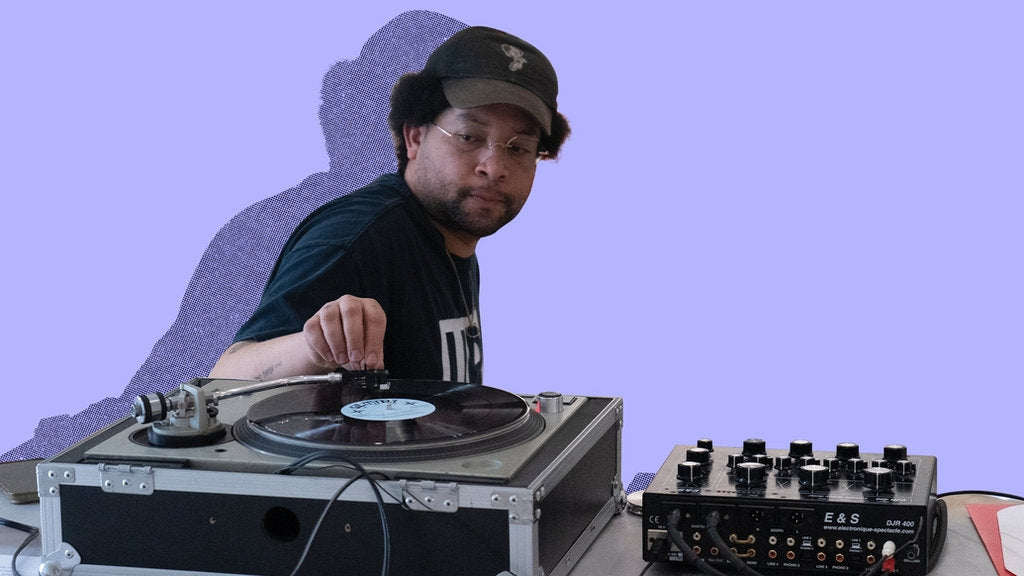
Russell E. L Butler is a Bermudian artist that explores the cultural expressions of the African diaspora. Russell's work invokes the histories surrounding Experimental, Dub, and House music. They live and work in Brooklyn, New York.
"Evolution characterizes my Designs"
We first got in touch with Bert Vermeulen (NL) in 2022 – because he designed the Fénix II, a legendary synthesizer that we thought should be made available to the public again. Bert has a long history in audio electronics. Currently he is working on Aulos, a fully analogue series of feature packed modules in a variety of formats, including Eurorack and standalone Banana instruments.
How long have you been working in instrument making, and what led you to it?
When I started audio electronics about 50 years ago, it was a hobby. Later on, I became an engineer working at Synton, designing electronic musical instruments.
Which musicians, works, or moments have had the biggest influence on you as a designer, and where do you draw your inspiration from?
The spirit of the times during the Synton period was my greatest source of inspiration. Inspiration and ideas I’ve always gotten from conversations with people.
What matters most to you when developing an instrument, and what makes a good instrument?
The most important thing is that the result is what I hoped for. I don't think there are any bad instruments. If the user is satisfied, then it is good. I want to create surprising instruments.
What is the biggest challenge in instrument making, and which challenge are you most proud of having overcome?
The biggest challenge in making instruments is the availability of parts and the quality of the production. Naturally, the result must also appeal to potential customers. I have succeeded reasonably well in this.
Which materials and details do you care most about when designing instruments?
I use what I think is necessary; the user interface is important and I think that an instrument should last a long time.
Is your focus more on sound exploration, artistic or functional qualities when designing your instruments?
My focus is on combining functional features with more unusual ones. For example the phase shifting capabilities of a sub-oscillator or the delay on the Fénix II waveshifter.
How do errors or mistakes play a role in your creative process? What has been the most “beautiful” mistake encountered in your designing journey?
I have conducted many experiments that eventually ended up in the trash. These were not always mistakes. Parts of the experiments have been applied to the Fénix design. Not errors, but I liked the surprising features best. For example, the sum outputs in combination with the clock input of the Fenix III sequencer causes a surprising effect.
What influences you most in your process: control or chaos? Mystique or clarity? And how does that impact your outcome?
Evolution characterizes my designs. I start with a basic idea, and this evolves over time. This usually results in a more complex system.
Your instruments are unique. In what ways do they bear your fingerprint?
I design a musical instrument from a technical perspective, always considering how it fits into the whole and how I would use it – in my head, of course. I am not a musician.
-
Plumbutter 2
Regular price From $1,853.79Regular priceUnit price / perReduced price From $1,853.79 -
Cocoquantus 2
Regular price From $1,853.79Regular priceUnit price / perReduced price From $1,853.79 -
Fénix II PP
Regular price From $6,372.40Regular priceUnit price / perReduced price From $6,372.40